


Imagine walking from the couch to the store, taking the dog for a short walk, and then hopping on the tram – all without feeling that squeezing sensation in your toes that regular shoes often give. It’s exactly this situation that makes many people wonder if barefoot shoes can really work in everyday life.
It's easy to think that barefoot shoes only belong on runs or long mountain hikes, but in our experience they have just as much place in city life. One of our customers, a father of two small children, told us that he can now run for the bus in the morning without his toes feeling like they're trapped in a box. So what's the secret?
First and foremost, it’s about the right style. Our Be Lenka Loafer – casual barefoot shoes feature a wide toe box and zero-drop sole that allows your foot to move naturally, while still looking stylish in the office. They’re cushioned enough for asphalt, yet still give you the barefoot feel you’re looking for.
Here are three concrete steps you can start with today:
1. Choose a model with good grip and a toe box that doesn't pinch – keep in mind that you'll be walking on both dry sidewalks and wet winter roads.
2. Exercise your feet gradually: start with 15-20 minutes at home or in the garden and then increase the time by 10 minutes each week.
3. Pair with the right accessories: a pair of thick, breathable socks and a good sunglasses strategy will protect both feet and eyes during the bright winter days.
And yes, don't forget to protect your eyes when the snow is highly reflective. A quality pair of sunglasses can make a big difference – check outthis guide to find the right model if you have a small face.
Follow these tips and you’ll soon notice how natural foot movement reduces stiffness, improves posture, and makes long days in the city significantly more comfortable. So next time you’re out for a quick errand, try barefoot shoes in your everyday life and feel the difference for yourself.
tl;dr
Barefoot shoes in everyday life provide natural foot movement, reduce stiffness and allow you to walk further without your toes feeling trapped and improve posture.
By choosing models with a wide toe box, zero-drop sole and good grip, like our Loafers, you can easily integrate them into work, walks and winter adventures safely in all weather conditions.
Step 1: Choose the right barefoot shoe for everyday use
Do you find that regular shoes often feel like a pinch around your toes when you're just going to the grocery store? It's that little annoyance that many of us have learned to accept – until we try barefoot shoes in everyday life.
The first step is to understand what really makes a barefoot shoe comfortable for everyday use. It’s not just about a thin sole, but a combination of a wide toe box, zero drop, and grip that can handle both asphalt and slush.
Width in the toe box – give your toes breathing room
When your toes are allowed to spread out, the pressure on your joints is reduced and you will quickly notice that you can walk further without getting numb. Think about how it feels to stand on a soft sandy beach, with only your feet on the ground – it is the same feeling you want in the city.
Many of our customers, including families with small children running after the dog, have found that a wide toe box allows them to get over slippery sidewalks without feeling like they are slipping. A good rule of thumb is to be able to place an index finger between your toes and the edge of the shoe when trying them on.
Zero-drop – leave the body in a natural position
Zero-drop means that the heel is level with the forefoot. This allows the knees, hips and spine to maintain a more ergonomic alignment, which is invaluable for those who spend many hours in the office or in the car. I have noticed myself that after a few weeks of wearing zero-drop, my posture feels more upright, especially when I carry a backpack on the way to work.
An example of a model that combines these qualities is our Be Lenka Loafer , which is designed to suit both the office environment and a quick walk to the grocery store.
Grip in all weathers
Everyday use means you sometimes walk on rainy sidewalks or snowy streets. A durable rubber sole with a pattern that grips on both wet and dry surfaces is therefore a must. It's not just a safety issue; good grip also reduces the risk of having to stop and adjust your shoes throughout the day.
If you often take your dog out in the dark of winter, pair your new barefoot shoes with a pair of sunglasses that protect against glare. For a simple guide for small faces, check out thisbest sunglasses guide – it’s a smart step to keep both your feet and eyes in tip-top condition.
Want to see how you can quickly try out a new barefoot shoe without risking injury? Check out this video that shows a simple five-minute check-in you can do at home before you head out on the town.
The video also shows you how to get a feel for the right fit by walking on a soft mat and then on a hard floor. If you notice any uncomfortable pressure points, adjust the size or try a model with a little more flex.
1️⃣ Start by walking barefoot at home for at least five minutes to wake up your feet. 2️⃣ Choose a shoe with a wide toe box and zero-drop, like our Loafers or one of our boots. 3️⃣ Test your grip by walking on both smooth and uneven surfaces in your home. 4️⃣ If you feel like your toes have enough room, put on socks and take a short walk around the block. 5️⃣ Repeat each week, increasing the time by five to ten minutes.
For those interested in how natural foot movement can support your overall well-being, check out the resources at XLR8well. They offer programs that focus on proactive health, complementing the benefits of barefoot walking in everyday life.
Once you've found the right model, think about how it looks in your wardrobe. A stylish pair of barefoot shoes that matches both jeans and a coat will quickly become a favorite in your everyday outfit.
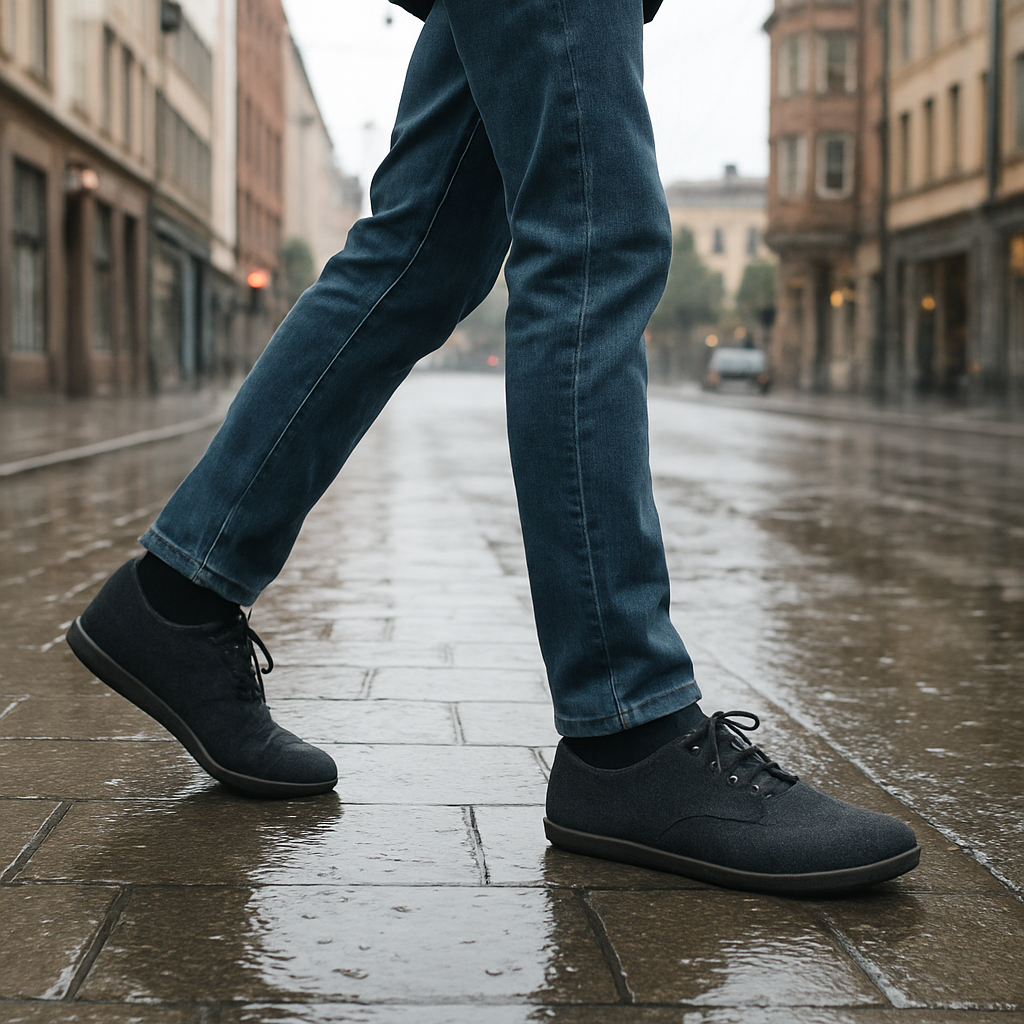
In short, the key is to combine the right fit, zero-drop and grip. When you have these three components in place, barefoot shoes become a natural part of your everyday life – whether you’re on your way to work, in the woods with the family or just taking a quick walk with the dog.
step 2: adjust the shoes to your foot type
You’ve looked at the toe box and grip, but now it’s time to think about what your own foot looks like. Everyone’s feet are a little different – wide, narrow, high arched or flat – and that affects which barefoot shoe model feels right for everyday use.
Step 1 – recognize your foot type
Stand barefoot on a piece of paper and trace the outline with a pencil. Do you see a clear arch in the middle? Then you have a normal or high arch. If the line is almost straight, you have flat feet. The width of the forefoot is also important: if you see that your toes spread naturally, you are likely to have a wide foot.
It sounds a bit like a walk in the forest with your own map, but it's actually super easy and gives you a concrete foundation to stand on when trying on shoes.
Step 2 – match the shoe's toe box to your foot width
If you have wide toes, look for a model with a generous toe box. A good rule of thumb is that you should be able to turn your toes sideways without feeling any pressure. If your toes feel pinched, it's a sign that you should go up a size or choose a model with a wider fit.
For narrow feet, a narrower toe box is often more comfortable, but make sure it still provides at least 1 cm of extra space compared to your actual foot length. It's that small margin that makes the difference between a comfortable day and a sore foot after a few hours.
Step 3 – test the sole against your arch type
Zero-drop soles are standard on our barefoot shoes, but if you have high arches, a slightly stiffer midsole can provide extra support without losing natural movement. Try walking on a soft mat first – if you find your heel feels unstable, a model with a little more cushioning in the midsole may be the right choice.
If you have flat feet, remember that a more flexible sole allows your foot to move freely and strengthens the small muscles that otherwise get too much strain. Many of our customers with flat feet have noticed that their legs become less tired after just a few weeks of regular use.
Step 4 – adapt to your lifestyle scenario
Are you a dog owner who often runs after a leashed puppy in the snow? Then you want a model with good grip and a water-repellent membrane - so your feet stay dry and you don't slip on the ice.
Do you have small children running around the apartment? A soft, recycled cover provides both warmth and breathability, and the wide toe box can accommodate playful feet without squeezing.
For outdoor enthusiasts who hike in the woods and mountains, a robust rubber sole with a multidirectional tread pattern is invaluable. It gives you a firm grip on both dry gravel roads and wet rocks.
Step 5 – try it for real
Once you have found a model that matches your foot type, take it home and walk in it for 10-15 minutes. Feel how your foot sits when you step on a soft floor, then on a hard surface. If you notice a slight rubbing or pressure point, adjust the size or change the model before walking longer distances.
We have seen that most people manage to find their perfect fit within two or three tries. It's just a matter of listening to your feet and giving them the time they need to adapt.
Checklist for adjusting shoes to your foot type
- Measure the width and length of your foot with a simple paper tracing.
- Choose a toe box that provides at least 1 cm of extra space.
- Test the zero-drop sole against your arch type – adjust with a little cushioning if you have a high arch.
- Choose grip and membrane according to your daily activities (dog walking, children's play, hiking).
- Walk in the shoes at home for short intervals before taking them on longer outings.
By following this guide, you can truly tailor your barefoot shoes to your feet and your everyday life. So the next time you hit the pavement – or into the woods – you’ll know exactly what to look for, and your feet will thank you.
step 3: train your feet to go barefoot in shoes
You've found the right model and adjusted the fit – now it's time to let your feet get used to the new freedom. Walking barefoot in shoes doesn't feel like a sprint, it's more like a long walk in the rain: you take one step at a time and let your body adapt.
Why gradual training build-up is key
Feet are like little muscles with their own memories. Throwing them into an hour-long walk straight away can cause pain or bruising. Research from Simply Barefoot shows that incremental increases of 10-15 minutes per week reduce the risk of overuse and build strength in the arch and toes.
This means you should start with short sessions at home, then move on to short outings out in the city and eventually take longer distances.
Step-by-step plan for the first four weeks
- Week 1 – “Warm Up” : Walk for 10 minutes on a soft floor (carpet or hardwood). Focus on feeling each toe on the ground. If you notice a slight burning sensation, take a break and roll your feet into a soft ball.
- Week 2 – “Soft Start Outdoors” : Walk for 15 minutes on a flat sidewalk. Choose a route without major obstacles. Feel how the sole grips under your feet. A good indicator is that you don’t slip when you turn.
- Week 3 – “Increase Intensity” : Add 5 minutes to each session and introduce a hill or gravel field. This trains foot stability and strengthens the calf muscles.
- Week 4 – “Try longer distances” : Walk for 30 minutes, preferably with a short shopping trip or dog walk. If you have children running around, let them play at the same time – their spontaneous movements are perfect for varying the load.
Every week you should finish by massaging your feet with a small roller or a towel to increase blood circulation.
Tips from the field
A family in Stockholm said they started by walking around the garden while their dog sniffed every stone. The simple pleasure made them forget they were exercising, but their feet became stronger and they felt less tired after long days of work.
If you have a high arch, you can insert a thin foam plate into the shoe for the first two weeks for extra cushioning. Once you feel more stable, remove it and let the natural sole do the work.
For those of you who are more health conscious, a quick search on XLR8well can provide further insights into how foot strength is related to overall body well-being.
Product recommendation for the training phase
During training, the Realfoot Trekker High could be a good choice. It has a wide toe box and a flexible sole that provides support without restricting movement.
Quick checklist before you head out
- Make sure the toe box still has at least 1 cm of extra space.
- Make sure the sole has good grip on the surface you plan to walk on.
- Choose socks that wick away moisture – wool or technical materials work best.
- Bring a small first aid kit for any blisters or scrapes.
Comparison table – training steps and focus
| Week | Workout (min) | Focus area |
|---|---|---|
| 1 | 10-15 | Foot feel on soft surfaces, mobility |
| 2 | 15-20 | Grip on flat pavement, balance |
| 3 | 20-25 | Hill/gravel, calf muscle strength |
| 4 | 30-35 | Endurance, natural foot movement in everyday life |
Remember to listen to your body. If the pain becomes more than a slight burning sensation, take a step back and give your feet some extra recovery time. Within a few weeks, you will notice that your feet feel stronger, your balance improves, and you can walk further without your toes feeling cramped. So, what are you waiting for? Put on your shoes and let each step be a small victory.
step 4: care and maintenance of barefoot shoes in everyday life
You've just got your feet used to the new feel, but without proper care, even the best barefoot shoes can quickly lose their grip and comfort. So how do you keep them fresh as you go from the office to walking the dog?
Cleaning after each session
The best way to extend the life of your shoes is to wipe off any dirt as soon as you get home. Use a soft brush or damp cloth – avoid harsh chemicals that can break down the thin sole. According to a guide on OnlyFemale , lukewarm water and mild detergent are enough for most models.
Dry and store properly
After cleaning, let your shoes air dry naturally, preferably in a ventilated area. Avoid putting them in a dryer or near a direct heat source; heat can cause the sole to become brittle. Store them in a box with some newspaper to absorb moisture, or hang them in a shoe rack system that allows air to circulate.
If you have a pair for winter use, like our winter boots with Primaloft, you can add a lighter foam insole to protect against moisture between uses.
Sole care
The sole is the heart of a barefoot shoe – it provides the grip and sensory feedback. Clean it with an old toothbrush to remove any dirt or pebbles stuck in the tread. When you notice the rubber starting to wear down in specific areas, you can use fine-grit sandpaper to smooth out the surface without making it any smoother.
Check wear regularly
Take a minute each week to inspect both the upper and sole. Look for cracks, loose stitching, or lost grip texture. If you see that the sole is smooth in exposed areas, it's time to consider a new pair—worn grip can lead to slip-and-fall accidents, especially on icy sidewalks.
Tips for winter use
Winter road conditions require a little extra care. Use a water-repellent impregnation spray that is designed for breathable materials – it keeps water out without suffocating the shoe’s natural ventilation. Also, make sure to dry thoroughly after each rain session; moisture inside can create bad odors and soften the glue in the sole.
A common mistake is to switch to thick wool socks without adjusting the fit of the shoe. If you notice that your toes feel cramped, go down a size or choose a model with a slightly wider toe box, like the one we recommend for families with small children.
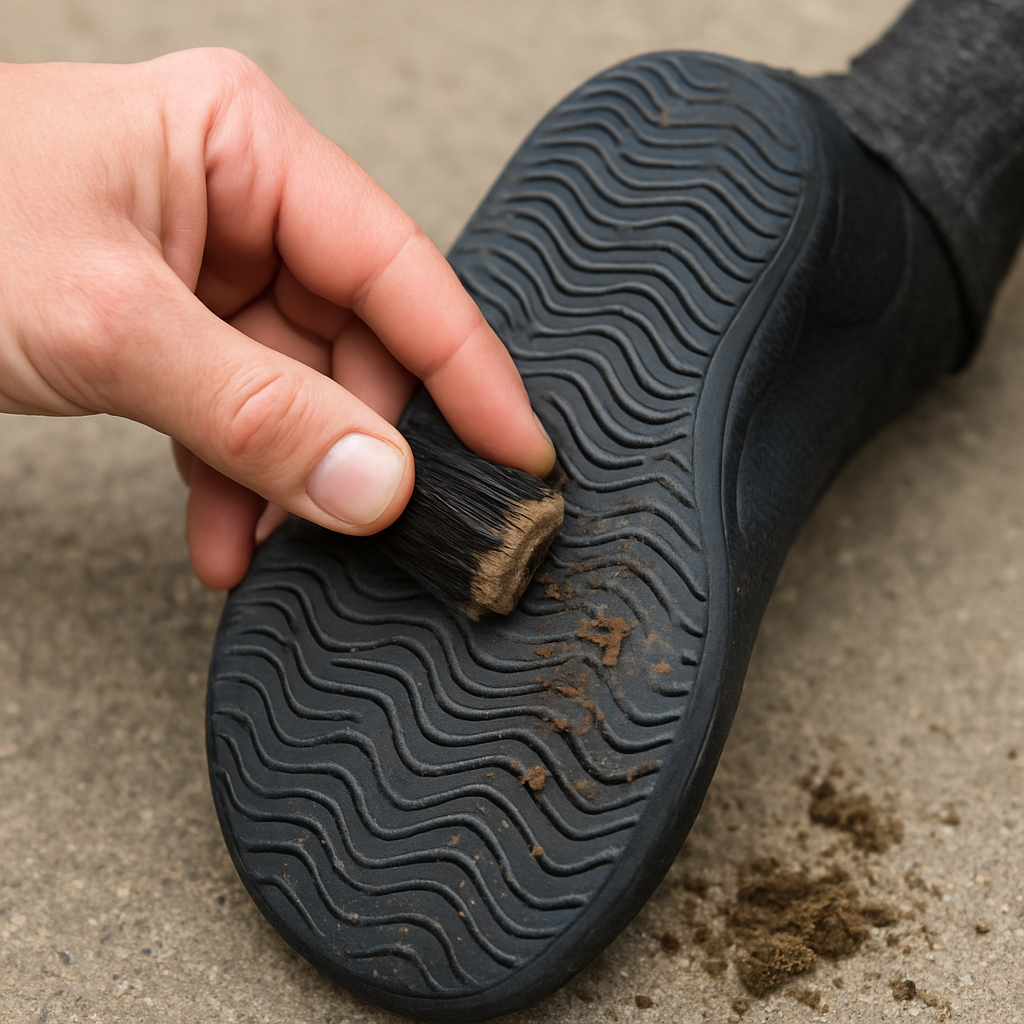
Remember that the upper deserves attention too. A damp cloth with mild detergent will remove sweat and dirt without destroying the breathable Flyknit construction that many of our models have. According to Fotproffsen, it is important to let the shoe dry completely before putting on new socks - otherwise moisture can lead to bad odors and mold.
Another simple habit is to rotate between two pairs of barefoot shoes. This way, each shoe has time to recover, the sole can breathe, and you avoid the material getting too worn out too soon – perfect for those who commute daily.
Finally, create a simple maintenance routine: 1) brush off dirt every night, 2) dry in a dry place, 3) inspect weekly, 4) apply waterproofing as needed. This way, your barefoot shoes will be ready for the next day, whether you're going to work, chasing the dog, or taking a spontaneous turn on an icy sidewalk.
Step 5: Common mistakes and how to avoid them
It's easy to think you've got everything under control when you start using barefoot shoes in your everyday life, but the most common mistakes are often hidden in the little everyday things. Here we'll go through them one by one, so you can avoid unnecessary discomfort and keep your feet happy.
1. Going too quickly from regular shoes to barefoot shoes
We’ve seen many customers jump right into long walks without giving their feet time to adjust. According to a guide at Freefoot, the transition can take 6-60+ weeks depending on your previous shoe history. So start with 10-15 minutes at home, then gradually increase by 5-10 minutes each week. If you feel a burning sensation, slow down and give your feet a rest.
2. Choosing a toe box that is too narrow
A toe box that is too tight will pinch your toes and can lead to bunions or pain in the forefoot. Feel if you can spread your toes without anyone pressing. If you feel resistance, go up half a size or choose a model with a wider box – this is one of the biggest mistakes we often hear about.
3. Forgetting to rotate your shoes
Wearing the same pair every day will wear the sole unevenly and reduce grip on slippery surfaces. We recommend having at least two pairs of barefoot shoes and changing them every other day. This way, each shoe has time to “breathe” and recover, which will extend their lifespan.
4. Skipping regular inspections
A worn out sole can be dangerous, especially on winter sidewalks. Take five minutes every week to go over both the upper and sole. Look for cracks, lost grip patterns, or loose stitching. If you see wear in critical areas, consider replacing your shoes before they become a slipping hazard.
5. Wearing socks that are too thick or too dirty
Barefoot shoes are designed to breathe. Thick, non-wicking socks can create moisture, bad odors, and even mold. Choose thinner wool or synthetic socks that wick away sweat. A short wash of your socks every week is enough to keep them fresh.
6. Ignoring weather conditions
Water-repellent membranes are a great feature, but that doesn’t mean you can walk in the rain without protection. After a rainy day, dry your shoes in a dry place and apply a light waterproofing spray. On icy surfaces, double-check that the sole still has good grip – otherwise you could risk a fall.
7. Relying on “quick fixes”
Some forums suggest throwing in super-thin insoles to “speed up” the transition. This can actually do more harm than good, as the foot loses the gradual load it needs to strengthen. Stick to the gradual plan and let the muscles build naturally.
8. Overlooking proper foot exercises
Your feet need active exercise to adapt to the new movement. Simple exercises like toe-splitting, rolling with a small ball, and short calf presses can make a big difference. Do them 2-3 times a day, especially in the first few weeks.
9. Expecting immediate results
It's tempting to think you'll feel the difference right away, but it often takes time before you notice improved posture and reduced stiffness. Be patient and let your body adapt at its own pace. If you experience persistent pain, consult a podiatrist.
In summary, the biggest pitfalls are walking too fast, choosing the wrong fit, skipping maintenance, and neglecting foot exercises. By following these simple checks, you can avoid common problems and truly enjoy barefoot everyday life —whether you're commuting to work, chasing the dog, or taking a quick turn on the sidewalk.
One last reminder: Please read more about how everyday shoes affect foot health in an article on Träningsläran . There you will get a broader picture of why choosing the right shoe is so important for long-term foot health.
conclusion
We've covered everything from choosing the right model to how to exercise and care for your barefoot shoes in everyday life. Now it's time to gather the thread and make it easy for you.
key insights to take with you
– A wide toe box and zero-drop allow natural foot movement without pinching.
– Step-by-step training plan – start with 10 minutes at home and increase by 5 minutes each week.
– Regular maintenance – brush off dirt, let the shoes air dry and check the sole every week.
this is how you do the next step
Get out a checklist and place it in your kitchen or bathroom shelf. The next time you put on your shoes, quickly go through the points: does the toe box fit? Is the sole clean? Have you waited until your feet feel ready?
If you feel any irritation, reduce the time by five minutes and resume when you feel better. It is completely normal for the body to adapt at its own pace.
Remember, every step you take, no matter how small, builds stronger feet and better posture. So the next time you go to pick up the mail or take the dog for a short walk, trust that you already have the tools to walk comfortably in barefoot shoes.
Good luck – and enjoy the freedom that only barefoot shoes in everyday life can give.
We believe you will soon notice the difference and feel stronger every day.
FAQ
What type of barefoot shoe is best for everyday wear?
If you're out and about, commuting to work, or taking your dog for a short walk, you'll want a shoe with a wide toe box and zero drop so your toes can spread naturally. A model with a flexible rubber outsole provides good traction on both dry and wet surfaces, and a breathable upper keeps your feet from getting damp. So, look for a shoe that feels like an extension of your own foot.
How quickly can I get used to barefoot shoes in everyday life?
It depends on how long you have been walking in traditional shoes. We usually recommend starting with 10-15 minutes at home on a soft floor, and then increasing by 5-10 minutes each week. If you feel a slight burning sensation, take a break and let your feet rest. This way you build strength in the arch of your foot without overloading the muscles, and you avoid unnecessary pain.
Can I wear thick socks with barefoot shoes?
Yes, but be mindful of the material. Wool or technical socks that wick away sweat work best, especially during the winter months. Thick cotton socks can trap moisture, increasing the risk of blisters and bad odor. Try a thin but warm wool sock and adjust the size if the toe box feels tight – this will give you both warmth and freedom of movement. If you prefer extra support, you can insert a thin insole at first, but remove it as your feet get stronger. Also, avoid switching to thick sports socks until you are completely used to the sole, as this can reduce the natural feel.
How do I care for barefoot shoes so they last longer?
After each session, wipe off dirt with a soft brush and let the shoes air dry in a ventilated area. Avoid direct heat, as this can make the sole brittle. A weekly check of both the upper and sole will help you detect wear in time. When you see that the grip is wearing out in exposed areas, consider changing to a new pair before the risk of slipping arises.
Are barefoot shoes suitable for children?
Absolutely, as long as you choose a model with a wide toe box and a soft sole. Children's feet develop quickly, and natural movement promotes stronger muscles and better balance. Make sure the shoes are easy to put on and take off, and that the socks are moisture-wicking. A short start of 5–10 minutes per day is enough to get them used to the new feeling.
What do I do if I get blisters when I start walking barefoot?
First of all, reduce the amount of time you wear your shoes and let your skin recover. Wear a soft, moisture-wicking sock and apply a protective plaster to the affected areas. If the blisters continue, check that the toe box is not too tight – sometimes going up half a size or choosing a wider fit is enough. Remember to give your feet a day of rest between workouts so that the skin has time to heal completely and you avoid the problem becoming chronic.
How do barefoot shoes affect my posture and back?
The zero-drop sole places the foot in a natural position, reducing excessive forward tilt of the pelvis. This can in turn relieve pressure on the lower back and improve posture when standing or walking for long periods. Combine with simple exercises like squats and core training for best results – you’ll notice the difference after just a few weeks of regular use. You can also try standing on a soft surface, like a yoga mat, to allow your foot to adapt even more without putting stress on your joints.